

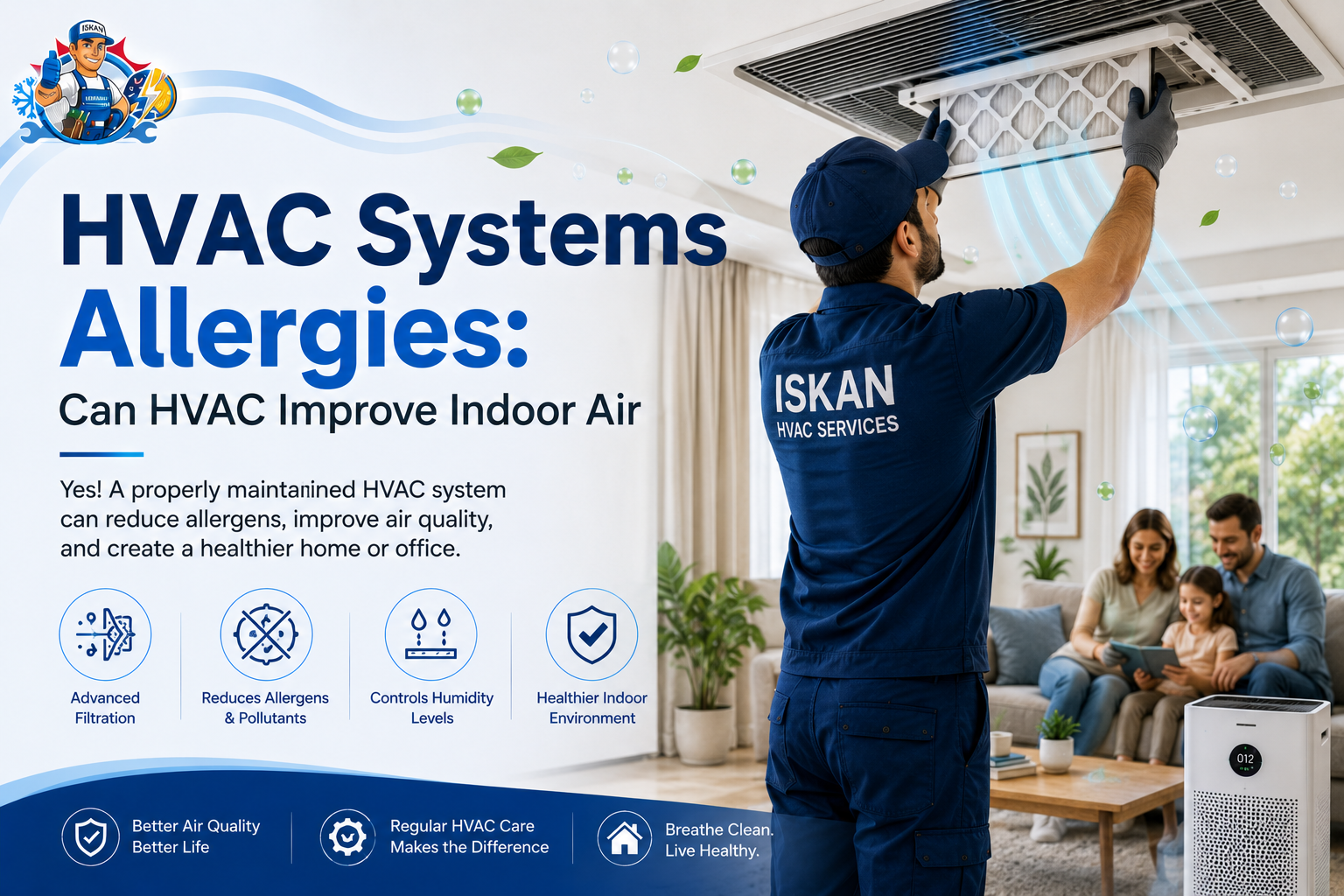
Indoor allergies can make a normal home feel uncomfortable. You may clean the floor, wash the curtains, and close the windows, but sneezing, coughing, itchy eyes, blocked nose, dust smell, or breathing discomfort may still continue. In many homes, the problem is not only outside pollen or visible dust. The hidden issue can be poor indoor air quality. This is where the topic of HVAC systems allergies becomes important.
Your HVAC system does more than heat or cool the home. It also moves air, filters particles, controls humidity, and affects how dust, pollen, pet dander, mold spores, and other airborne irritants travel inside your rooms. A clean and well-maintained HVAC system may help reduce allergy triggers. However, a dirty or poorly serviced system can make indoor air feel worse.
Many homeowners also ask another practical question: “Should I clean, repair, or replace my HVAC system?” That is where the $5,000 rule HVAC guideline becomes useful. It helps you compare repair cost with system age before spending money.
In this complete guide, you will learn whether HVAC systems can improve allergies, what HVAC cleaning service can do, what average HVAC service call cost looks like, how residential HVAC service price list items are usually structured, and when the $5,000 rule may point toward replacement.
Quick Answer: Can HVAC Systems Improve Allergies?
Yes, HVAC systems can help improve indoor allergy conditions when they are clean, properly maintained, and fitted with the right filter. A good HVAC system can reduce airborne particles, control humidity, support ventilation, and prevent dust from spreading through the home.
However, HVAC does not cure allergies. It only helps reduce some indoor triggers. Allergy symptoms can come from many sources, including bedding, carpets, pets, outdoor pollen, mold growth, old furniture, humidity, and poor cleaning habits.
So, the better answer is this: HVAC systems may improve allergies when they are part of a complete indoor air quality plan.
What HVAC Can Do for Allergy Control
An HVAC system can support allergy control in three main ways: filtration, humidity control, and airflow management.
Filter Airborne Dust, Pollen, and Pet Dander
The air filter is one of the most important parts of an HVAC system for allergies. As air passes through the return duct, the filter captures particles. A better filter can trap smaller particles, including dust, pollen, and pet dander.
This matters because many allergy triggers are airborne before they settle on floors, beds, curtains, and furniture. If the filter is dirty, low-quality, or not changed on time, your HVAC system may circulate more dust instead of reducing it.
Control Humidity and Mold Risk
Humidity plays a big role in indoor allergies. High humidity can support mold growth and dust mite activity. Very dry air can also irritate the nose, throat, and skin.
A properly working HVAC system helps remove some moisture from indoor air during cooling. In homes with ongoing humidity problems, a technician may suggest better drainage, coil cleaning, duct inspection, or a separate humidity control solution.
Improve Ventilation and Air Movement
Good airflow helps prevent stale indoor air. When air does not move properly, rooms can feel dusty, damp, or heavy. Poor airflow can also create hot and cold spots.
A balanced HVAC system helps move air more evenly. This can support comfort and indoor air quality, especially when the system is maintained well.
Why HVAC Does Not Cure Allergies Completely
HVAC can reduce airborne triggers, but it cannot remove every allergen. Dust mites can live in bedding. Pet dander can stick to furniture. Pollen can enter through clothes, shoes, windows, and doors. Mould can grow behind walls or under wet surfaces.
That is why HVAC maintenance should work together with regular cleaning, moisture control, and smart indoor habits.
What Causes Indoor Allergies at Home?
Before you spend money on HVAC cleaning service or replacement, you should understand the most common allergy triggers inside the home.
Dust Mites
Dust mites are tiny organisms that live in dust, bedding, mattresses, pillows, carpets, and fabric furniture. They are a common indoor allergy trigger.
HVAC filtration may reduce airborne dust, but it cannot remove dust mites from bedding or carpets. For better results, clean bedding often, reduce dust collection, and use proper filtration.
Pet Dander
Pet dander is made of tiny skin flakes from cats, dogs, and other animals. It can stay in the air and settle on furniture, floors, and clothing.
A better HVAC filter may help capture some airborne pet dander. However, regular vacuuming, grooming, and cleaning are also needed.
Pollen
Pollen usually comes from outside, but it easily enters the home through open windows, shoes, clothes, and pets. Once inside, your HVAC system may circulate it if the filter is weak or dirty.
During high pollen seasons, keeping windows closed and changing filters regularly may help.
Mold Spores
Mold grows where moisture is present. Leaky ducts, clogged drain lines, dirty coils, wet walls, and high humidity can all support mold problems.
If your HVAC has a musty smell, water leakage, or visible mold near vents, you should not ignore it. Cleaning may help, but the moisture source must also be fixed.
Dirty Ducts and Poor Airflow
Dirty ducts do not always cause allergies, but they can hold dust, debris, pet hair, and sometimes mold. If ducts are leaking, they may also pull dusty air from attics, basements, or crawl spaces.
Poor airflow can make the problem worse because rooms do not receive clean and balanced air.
How HVAC Systems Help Reduce Allergy Triggers
A healthy HVAC system supports cleaner indoor air through several connected functions.
Better Filtration
Filtration is the first defense. The filter captures particles before air returns to the system and moves back into the home.
For allergy-sensitive homes, a higher-quality filter may help. However, the filter must match the system. A filter that is too restrictive can reduce airflow and put stress on the blower motor.
So, do not choose a filter only by the highest number. Choose one that your HVAC system can handle.
Cleaner Coils and Blower Parts
The evaporator coil and blower can collect dust over time. When these parts become dirty, airflow drops and moisture may stay longer inside the system. This can create a musty smell or poor cooling.
A professional HVAC cleaning service can inspect and clean these parts. This may improve cooling performance, airflow, and indoor air quality.
Balanced Indoor Humidity
Humidity control is very important for homes with allergy problems. Too much moisture can support mold. Too little moisture can make air feel harsh.
If your home feels damp even when the AC is running, the system may be oversized, short cycling, dirty, or not draining properly. A technician can check the cause.
Proper Ventilation
Ventilation helps dilute indoor pollutants. In simple words, it replaces stale air with cleaner air when outdoor conditions are suitable.
However, ventilation must be managed carefully. If outdoor air is polluted or pollen levels are high, bringing in too much outside air may not help allergy sufferers. The right approach depends on local air conditions, home design, and HVAC setup.
Best HVAC Filter for Allergies
Many homeowners search for the best HVAC filter for allergies. The answer usually depends on your system, your allergy triggers, and your airflow needs.
What MERV Rating Means
MERV stands for Minimum Efficiency Reporting Value. It is a rating that shows how well a filter captures particles. A higher MERV rating usually means better filtration.
Common basic filters may capture larger dust. Better filters can capture smaller particles such as pollen, pet dander, and fine dust.
Is MERV 13 Good for Allergies?
MERV 13 is often recommended for improved filtration where the system can support it. It can capture smaller particles better than many low-grade filters.
However, not every residential HVAC system can handle MERV 13 without airflow issues. If airflow becomes too restricted, your system may work harder, use more energy, and cool or heat less effectively.
Before upgrading, ask a technician to check system compatibility.
Why Filter Compatibility Matters
A filter is not only about air quality. It also affects equipment performance. A very restrictive filter can reduce airflow across the coil. This may cause poor comfort, frozen coils, overheating, or higher energy use.
The best filter is the one that improves air quality without hurting system airflow.
HVAC Cleaning Service: Is It Worth It for Allergies?
HVAC cleaning service can be useful when the system is visibly dirty, has airflow problems, produces a musty smell, or has dust buildup around vents. It may also help after renovation work, water damage, pest activity, or long-term neglect.
Still, HVAC cleaning is not magic. It works best when the real problem is dirt, dust, clogged parts, or poor maintenance.
When HVAC Cleaning Helps
Cleaning may help when:
The filter gets dirty very quickly.
Dust comes out of vents.
The indoor unit smells musty.
The coil is dirty.
The blower wheel has dust buildup.
The drain line is clogged.
Airflow feels weak.
Allergy symptoms feel worse when the system runs.
In these cases, cleaning can improve airflow and reduce dust circulation.
When Cleaning Alone Is Not Enough
Cleaning alone may not solve allergy problems if the home has mold behind walls, damp carpets, pet dander in furniture, old bedding, duct leaks, or outdoor pollen entering through gaps.
It may also fail if the HVAC system is too old, poorly sized, or mechanically weak.
That is why diagnosis is important before choosing any service.
Signs Your HVAC Needs Cleaning
You may need cleaning if your home has visible dust around vents, bad odor from air supply, weak airflow, water leakage, noisy blower, frequent filter clogging, or uneven cooling.
For allergy-sensitive homes, seasonal HVAC maintenance is a smart habit.
HVAC Service Cost: What Homeowners Should Expect
HVAC service cost depends on system type, location, season, technician experience, parts, and the problem itself. Emergency service usually costs more than a scheduled maintenance visit.
A simple inspection may cost less. A repair involving parts, electrical work, refrigerant, motor replacement, or deep cleaning will cost more.
Average HVAC Service Call Cost
The average HVAC service call cost often includes the technician visit and basic diagnosis. In many markets, a typical service call can fall around in cheap price . Inspection may cost more or less depending on the company and scope.
Some companies apply the service call fee toward the repair if you approve the work. Others charge it separately. Always ask before booking.
Residential HVAC Service Price List
A residential HVAC service price list may include:
Basic service call or diagnostic visit.
Seasonal maintenance.
Filter replacement.
Coil cleaning.
Drain line cleaning.
Thermostat replacement.
Capacitor replacement.
Blower cleaning.
Duct inspection.
Duct cleaning.
Refrigerant leak inspection.
Fan motor repair.
Compressor diagnosis.
Indoor air quality upgrade.
Prices vary widely. For example, basic maintenance may be affordable, while motor or compressor-related repair can be much higher.
What Changes the Final Service Price?
Several factors affect the final price:
System age.
System size.
Part availability.
Labor time.
Emergency timing.
Warranty status.
Indoor unit access.
Outdoor unit access.
Duct condition.
Cleaning level.
Refrigerant type.
For a fair decision, compare not only price but also diagnosis quality, warranty, technician skill, and service details.
What Is the $5,000 Rule HVAC Homeowners Talk About?
The $5,000 rule HVAC guideline is a simple repair-vs-replacement formula. It helps homeowners decide whether repairing an old HVAC system is still financially smart.
The formula is:
System age × repair cost = decision number
If the number is over $5,000, replacement may be worth considering.
If the number is under $5,000, repair may still make sense.
How to Calculate the $5,000 Rule
Imagine your HVAC system is 8 years old and the repair cost is $300.
8 × 300 = 2,400
That is below $5,000, so repair may be reasonable.
Now imagine your system is 12 years old and repair cost is $600.
12 × 600 = 7,200
That is above $5,000, so replacement may be worth discussing.
Example for Repair vs Replacement
Here is a simple example:
A 6-year-old HVAC system needs a capacitor replacement. The repair is not too expensive. The system has good airflow and no major history of breakdowns. In this case, repair is usually smarter.
A 13-year-old system has repeated compressor issues, poor airflow, high electricity bills, and expensive repairs. In this case, replacement may be better.
Why It Is Only a Guideline
The $5,000 rule is not a law. It is only a quick guideline. You should also consider energy efficiency, comfort, indoor air quality, warranty, repair history, and how long you plan to stay in the home.
Sometimes an older system is still worth repairing. Sometimes a younger system is not worth saving because it was poorly installed or badly maintained.
Repair, Clean, or Replace: Which Option Helps Allergies Most?
The best choice depends on the real cause of the indoor air problem.
Choose Cleaning If the System Is Dirty
If your HVAC is working well but smells dusty, has dirty vents, clogged filters, or poor airflow, cleaning may be the best first step.
A cleaning service can improve air movement and reduce dust circulation. It may also help the system run more efficiently.
Choose Repair If Airflow or Humidity Is Poor
Repair may be needed when the system has a faulty blower, clogged drain, frozen coil, refrigerant problem, thermostat issue, duct leak, or weak component.
For allergy control, airflow and humidity matter a lot. If your HVAC cannot move air correctly or remove moisture properly, allergy triggers may become harder to manage.
Choose Replacement If the System Is Old and Inefficient
Replacement may be the better option if the system is older than 10 years, needs frequent repairs, uses too much energy, cannot control humidity, or fails to keep rooms comfortable.
A new system may offer better filtration options, improved airflow, stronger humidity control, and better energy efficiency.
How to Improve HVAC Allergy Performance at Home
You do not always need a full replacement to improve indoor air quality. Start with simple steps.
Replace Filters Regularly
Change or clean the filter on schedule. Homes with pets, dust, children, or allergy-sensitive people may need filter changes more often.
A dirty filter blocks airflow and reduces filtration performance.
Keep Vents Open and Clean
Do not block vents with furniture, curtains, carpets, or storage boxes. Clean dust around supply and return vents.
Blocked vents can create pressure imbalance and reduce system performance.
Control Indoor Humidity
Try to keep indoor humidity at a comfortable level. If the home feels damp, check for water leaks, clogged AC drain lines, poor ventilation, or oversized cooling equipment.
Humidity control can help reduce mold and dust mite problems.
Schedule Seasonal HVAC Maintenance
Seasonal maintenance helps catch problems early. A technician can inspect filters, coils, blower parts, electrical components, thermostat settings, drain lines, airflow, and system performance.
For allergy-sensitive homes, professional maintenance can make a noticeable difference.
Final Advice for Homeowners
HVAC systems can help improve allergies, but only when they are clean, correctly maintained, and properly matched to the home. If your system is dirty, it may spread dust. If the filter is weak, it may miss small particles. If humidity is high, mold and dust mites may become worse.
So, do not jump directly to replacement. Start with inspection.
Start with Diagnosis Before Replacement
Ask for a full system check. The technician should inspect airflow, filter condition, coils, blower, ducts, drain line, thermostat, humidity, and system age.
If the issue is dirt, cleaning may be enough. If the issue is a failed part, repair may be best. If the system is old and expensive to maintain, replacement may be smarter.
Choose a Professional HVAC Service Team
For homeowners looking for HVAC cleaning, allergy-related airflow checks, service cost guidance, and repair-or-replacement support, Iskan AC can inspect the system and explain the best option clearly.
The right HVAC decision should protect comfort, air quality, energy use, and long-term cost.
Frequently Asked Questions
1. Can HVAC systems improve allergies?
Yes, HVAC systems can help reduce allergy triggers when they use proper filtration, clean airflow, and humidity control. They do not cure allergies, but they can support better indoor air quality.
2. What is the best HVAC filter for allergies?
A higher-efficiency filter, such as MERV 13 where compatible, may help capture smaller airborne particles. However, you should check whether your HVAC system can handle it without airflow problems.
3. Can a dirty HVAC system make allergies worse?
Yes. A dirty filter, dusty ducts, dirty coils, or moldy drain area may circulate dust and irritants. Regular cleaning and maintenance can help reduce this risk.
4. What is the $5,000 rule HVAC formula?
The $5,000 rule says to multiply system age by repair cost. If the result is over $5,000, replacement may be worth considering. If it is below $5,000, repair may still make sense.
5. What is the average HVAC service call cost?
Average HVAC service call cost often falls around $100 to $250, but the final price depends on location, service type, system condition, and whether parts are needed.
6. Is HVAC cleaning service worth it?
HVAC cleaning can be worth it if the system has visible dust, musty smell, clogged parts, weak airflow, or allergy symptoms that worsen when the system runs.
7. How often should HVAC filters be replaced?
Many homes replace filters every 1 to 3 months. Homes with pets, dust, or allergy-sensitive people may need more frequent replacement.
8. Does duct cleaning help allergies?
Duct cleaning may help if ducts are dirty, dusty, moldy, or contaminated. However, it will not solve allergies if the main triggers are bedding, pets, carpets, or outdoor pollen.
9. Should I repair or replace my HVAC system?
Repair may be better for minor problems and newer systems. Replacement may be better for older systems with frequent repairs, high energy bills, poor airflow, or expensive major failures.
10. Who should I call for HVAC allergy and service issues?
Call a professional HVAC service provider that checks filters, airflow, coils, ducts, humidity, and system condition before recommending cleaning, repair, or replacement.
